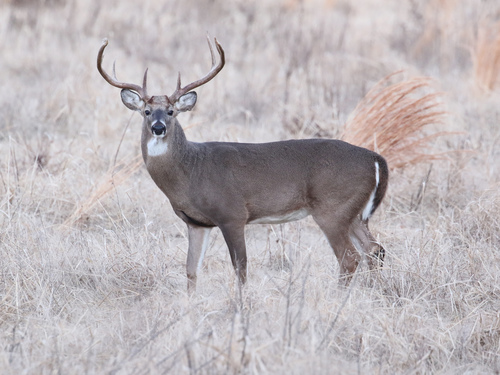
If a tan animal the size of a large dog freezes at the edge of a trail and then bounds away with a white flash, you just saw a White-tailed Deer (Odocoileus virginianus). They are the most widespread large mammal in the US and live in nearly every wooded suburb east of the Rockies.
What it looks like
Adults stand about 1m at the shoulder and weigh 45 to 135kg. The summer coat is rich reddish brown; the winter coat is grayer and thicker. The belly, throat, and the underside of the tail are bright white. When alarmed the deer raises its tail straight up, flashing the white as a warning to other deer. Only bucks grow antlers, which fall off each winter and regrow each spring covered in a soft skin called velvet.
When and where
- Season: Year round. Most active in spring and fall, when food is changing.
- Habitat: Woodland edges, suburban parks, golf courses, farm fields, backyards bordering trees.
- Best time: Dawn and dusk, when they leave cover to graze in open areas.
Fawns left alone on purpose
In late May and June, hikers often find a small spotted fawn curled up alone in tall grass and assume it has been abandoned. It has not. Mother does leave their fawns hidden for most of the day and return only to nurse, because the fawn is nearly scentless and safer alone than with a larger animal. The white spots on the back break up the outline, mimicking sunlight on the forest floor.
Spot one this weekend
White-tailed deer are Common in every state east of the Rockies and in most western states too. Walk a wooded trail near dawn or dusk and check the brushy edges where forest meets open ground. Stop and stay quiet if you see one, and the deer will often go back to grazing within a minute.