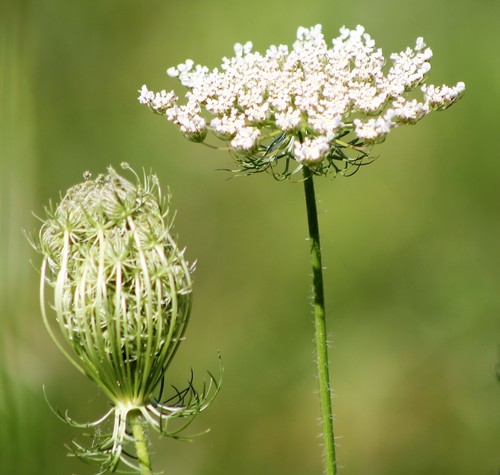
A flat white lacy disc the size of your palm waving above a roadside ditch is Queen Anne's Lace (Daucus carota), also called wild carrot. Up close the flower has a story hidden in its center, and the root is the ancestor of every orange carrot in the supermarket.
What it looks like
The plant stands 60 to 120 cm tall on a hairy, ridged stem. Each flower head is a flat-topped cluster, called an umbel, made of dozens of tiny white five-petaled florets packed shoulder to shoulder. In the middle of most heads sits a single dark purple or maroon floret. Leaves are deeply divided and fern-like, smelling distinctly of carrot when crushed. The taproot is white, slender, and edible only when very young.
When and where
- Season: Blooms June through October across the lower 48 and southern Canada.
- Habitat: Roadsides, abandoned lots, hayfield edges, dry meadows. Loves disturbed soil and full sun.
- Best time: Mid-summer afternoons when pollinators swarm the flat landing pads.
The queen's drop of blood
The single dark floret in the center is real and worth hunting for. Folklore says Queen Anne pricked her finger while sewing lace and a drop of blood fell into the middle. Botanists have a less romantic story: the dark floret mimics a small insect, which tricks other insects into landing, which makes the whole flower look busier and more attractive to pollinators. Bring a hand lens and you can watch the dot at close range. Important caution: Queen Anne's Lace looks similar to poison hemlock and water hemlock, both deadly. Never eat any part of a plant in this family unless an expert confirms it.
Spot one this weekend
Queen Anne's Lace is Common. Any country road or unmowed field edge in July or August will have hundreds. Pick one head and search the center for the tiny red dot. About nine out of ten flowers have one. Kids love this scavenger hunt and it works on any walk.